

The Inventor of 3D Printing: A Timeline of Chuck Hull’s Impact
Who Invented the 3D Printer in the World?
3D printing technology has completely transformed the landscape of modern manufacturing and engineering, and few questions are as fundamental as “Who invented this machine?” The answer points directly to Charles (“Chuck”) W. Hull, a visionary who not only conceived this technology but also founded an industry that continues to reshape the way the world manufactures everything from aircraft components to surgical implants.

Although many people associate 3D printing technology with recent technological breakthroughs, its origins date back to the early 1980s. Chuck Hull invented 3D printing technology, specifically a process known as Stereolithography (SLA), to address a persistent challenge in the manufacturing process: the time-consuming nature of prototyping. His innovation did more than simply accelerate product development; it created an entirely new category of manufacturing that is now known as additive manufacturing.
To understand the full significance of this invention, industry professionals need to examine the specific timeline of events, the patent filing date that protected this technology, and the evolution of Hull’s work, from a single “eyewash cup” to the bioprinting of human lungs.
The Spark of Invention: 1983 and the First 3D-Printed Part
Before 3D printing technology existed, design engineers faced a major bottleneck. Creating a prototype of a plastic component was a highly labor-intensive, one-off mold-making process. It required designing plastic injection molds, which often took six to eight weeks to manufacture. If the initial design was not perfect – a common occurrence in R&D – the team would have to modify the mold or start from scratch, extending the development cycle into a months-long challenge.
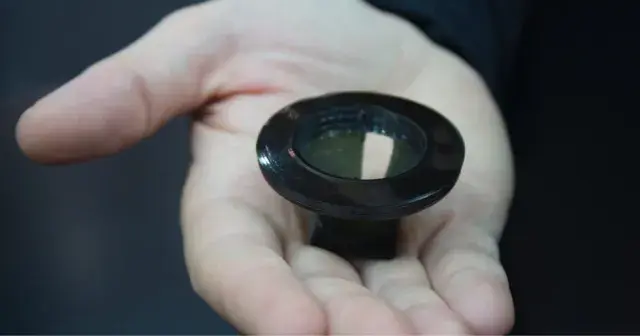
On November 10, 1983, Hull successfully demonstrated this concept. Using his new process, Stereolithography, he created the world’s first 3D-printed part: a simple eyewash cup. This small blue cup demonstrated that digital data could be transformed into a physical object in just a few hours rather than weeks, effectively pioneering the concept of rapid prototyping.
The Patent That Launched an Industry: 1984
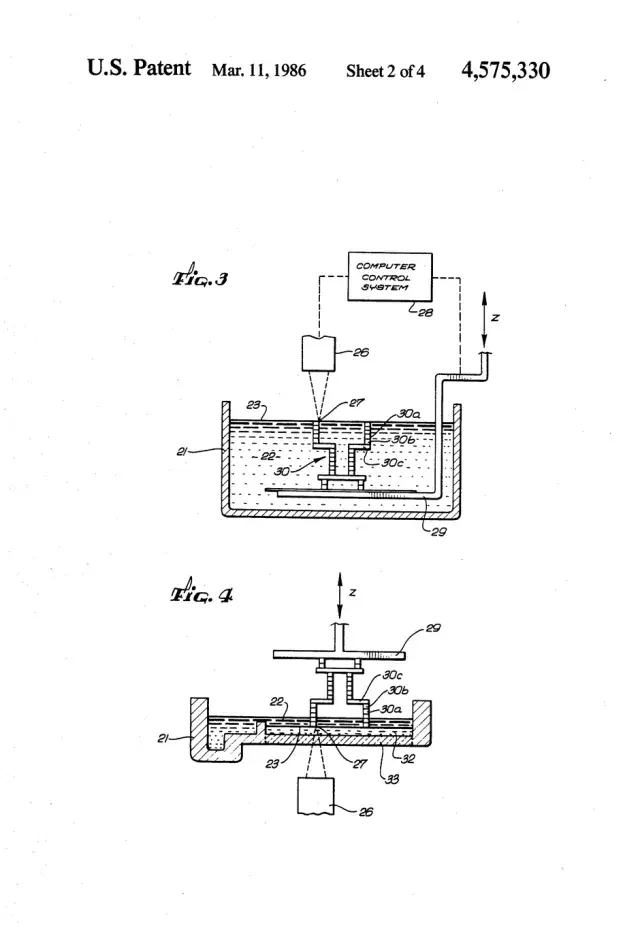
Stereolithography works by using a container filled with liquid photopolymer resin. A computer-controlled UV laser beam traces the cross-section of the part onto the surface of the liquid, causing it to harden (cure). The build platform then lowers, and the process repeats, building the object layer by layer. This patent described more than just a machine; it represented a fundamental shift in manufacturing logic – adding material only where needed rather than cutting it away from a solid block.
The Founding of 3D Systems and Commercialization (1986–1988)
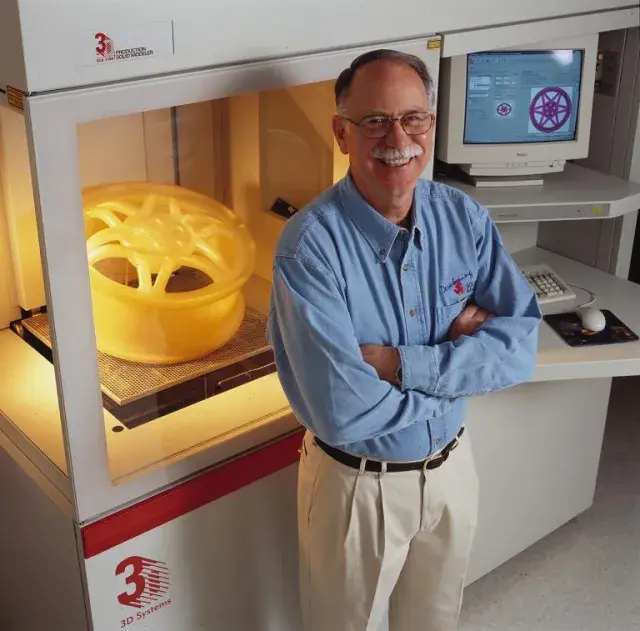
The industry witnessed its first hardware launch in 1987, when 3D Systems commercialized the SLA-1 Stereolithography printer. This was the first 3D printer ever made available on the market. Early adopters were primarily from the automotive industry, where there was significant interest in “rapid prototyping” to accelerate the vehicle design process. During the company’s first five years, this rapid prototyping capability remained the primary application of the technology.
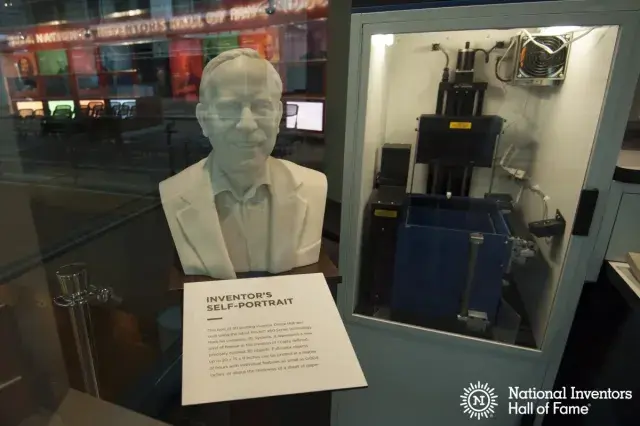
The American Society of Mechanical Engineers (ASME) has since recognized the SLA-1 as a Historic Mechanical Engineering Landmark, acknowledging its role in transforming global manufacturing. The original machine is currently on display at the National Inventors Hall of Fame Museum in Alexandria, Virginia.
Recognition of a Legacy
Innovations in Bioprinting and Honors (2015–Present)
Hull is leading a team collaborating with United Therapeutics on a joint development program. Their goal is ambitious: to establish an unlimited supply of human lungs without the need for immunosuppression. This technology aims to enable patients with end-stage lung disease to access transplantable organs that their bodies can tolerate.
Awards recognizing his lifetime achievements continue to accumulate:
-
2016: Hull received the Manufacturing Leadership Lifetime Achievement Award.
-
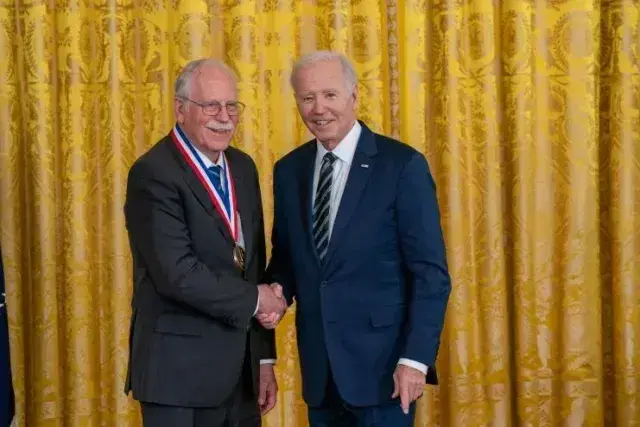
2023: On October 24, 2023, President Joe Biden presented Chuck Hull with the National Medal of Technology and Innovation (NMTI) at the White House. This is the highest honor in the United States for technological achievement.
-
2025: In February 2025, Hull was elected to the National Academy of Engineering (NAE), one of the highest professional honors for an engineer.
The Lasting Impact of Chuck Hull
When asked about his contributions, Hull remains humble. “I should have retired a long time ago, but I haven’t,” he stated, noting that “3D printing is just another tool, but it is a very powerful tool that can create just about anything.”
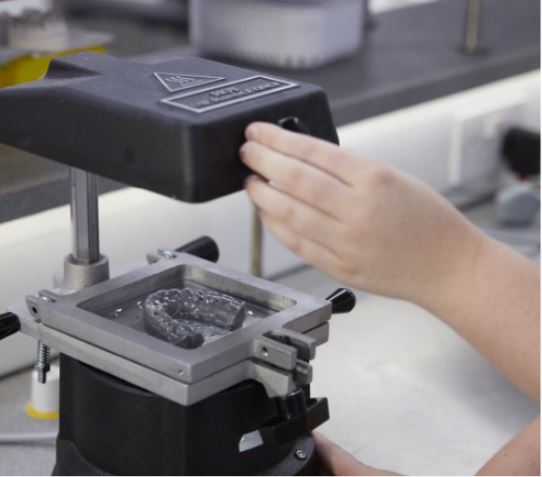
For professionals using 3D printing machines today – whether for aerospace turbine blades, clear orthodontic aligners, or automotive prototyping – this technology can all be traced back to a single spark of inspiration in 1983. Chuck Hull invented 3D printing not simply by building a machine, but by reimagining the very nature of manufacturing.
From filing the original SLA patent in 1984 to pioneering bioprinting in the 2020s, Hull’s career demonstrates that the definition of “manufacturing” is flexible. What began as a way to harden plastic using UV light has evolved into a means of printing human tissue, proving that the 3D printing industry he founded is still only scratching the surface of its potential.
In this article from the Lake Nona Impact Forum, Chuck Hull of 3D Systems reflects on the ideas, partnerships, and technologies shaping the next era of healthcare innovation.
Vote:
About 3D Smart Solutions
Pioneer in providing 3d technology solutions and services in Vietnam. Our operating criteria is: Do it Right the First Time. Please comment on the page Facebook and our Linkedin! Don’t forget to subscribe our newsletter, with all the latest 3D Solutions news delivered straight to your email address.